
The Psychology of Fashion: More Than What You Wear

An Ego/Id episode companion with Dr. Carolyn Mair — exploring identity, first impressions, and a more intentional relationship with what we wear.
Picture this: you are getting ready for an important conversation. You try on a jacket, take it off, then reach for something familiar. The question is not simply, “Does this look good?” It might be, “Do I feel like myself in this?” Or, “How do I want to show up?”
That is the doorway into the psychology of fashion. Not a rulebook for looking expensive. Not a guide to the next trend. A way to ask better questions about an ordinary part of life.
In The Psychology of Fashion, we welcome behavioral psychologist Dr. Carolyn Mair, author of The Psychology of Fashion and founder of the Psychology for Fashion degree programs at London College of Fashion. Our conversation explores clothing, identity, confidence, consumer behavior, and the pressures surrounding appearance.
Listen or watch the full episode: Spotify · Apple Podcasts · YouTube

Everyday choices, interesting questions. Photo: Matthew Henry / Burst
Clothes are part of the story — not the whole person
A review by psychologists Neil Hester and Eric Hehman argues that dress belongs at the center of how we study person perception, alongside faces, bodies, and context. Clothing and accessories can contribute to impressions of someone’s identity, status, and state of mind. Crucially, those impressions also depend on the observer’s cultural knowledge and stereotypes (Hester & Hehman, 2023).
The practical distinction is easy to miss: an impression is not proof. Reading an outfit as “professional,” “rebellious,” or “approachable” does not establish the wearer’s competence, character, or intentions.
For a useful thought experiment, imagine the same outfit at a wedding, a music venue, and a job interview. Would you read it differently? Then ask what changed: the person, or your expectations of the setting?
Instead of treating someone’s appearance as a shortcut to knowing them, try treating it as a reminder to stay curious. “That is not what I expected” can be the beginning of a question rather than the end of a judgment.
Can what you wear change how you feel?
Enclothed cognition describes the idea that wearing clothing, together with the meaning we attach to it, can influence how we think, feel, or act. It is an appealing idea, but the evidence deserves more care than a headline promising that one outfit will transform your brain.
A meta-analysis drawing on 40 studies found concerns about the replicability of early findings, while finding evidential value in studies published after 2015. In other words, this is not a simple story of “clothes change everything” or “clothes do nothing” (Horton, Adam, & Galinsky, 2025).
The sensible takeaway is modest: clothing may be one ingredient in an experience, not a guaranteed route to confidence or better performance. The research is not a prescription for an expensive suit, and an outfit is not a substitute for preparation or mental health care.
Try a personal observation rather than a makeover: choose something you already own and notice what happens when you wear it. Are you physically comfortable? Are you distracted by adjusting it? Does it fit what you need to do? Your answer does not have to match anyone else’s definition of stylish.
When inspiration turns into comparison
A useful question for your social feed is not only “Do I like this look?” but “How do I feel after looking at it?”
In an experiment, 130 female undergraduate students viewed either Instagram-style “fitspiration” images or travel images. Compared with the travel condition, the fitspiration condition produced greater body dissatisfaction and negative mood, and lower appearance-related self-esteem (Tiggemann & Zaccardo, 2015).
This was a short-term experiment with a specific sample and image type. It does not establish that every fashion account harms every viewer. It does offer a reason to pay attention to whether a particular kind of appearance-focused content leaves you feeling inspired or inadequate.
Consider a small feed audit: which accounts invite creativity, and which leave you feeling that your body, budget, or wardrobe is a problem to solve? You can experiment with muting an account without deciding that it is bad or that you are doing social media wrong.
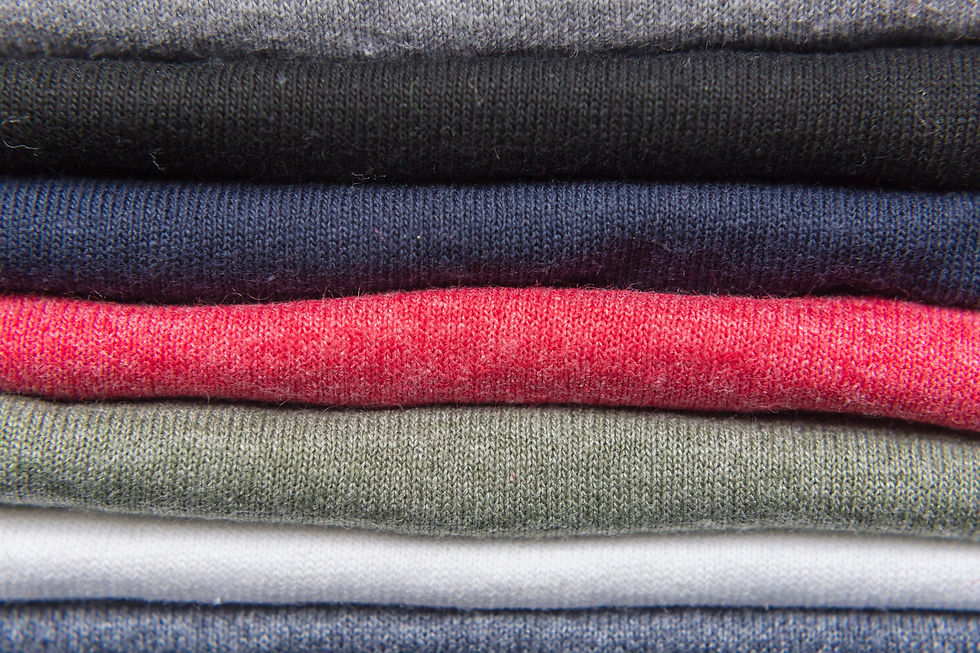
Start with what you already own. Photo: Matthew Henry / Burst
More intention does not have to mean more shopping
Our conversation also opens up questions about buying, trends, and sustainability. For your own wardrobe, a useful starting point is to separate three questions: What do I enjoy? What do I need? And what am I hoping a purchase will change?
None of these questions requires giving up the pleasure of clothing. You can love color, texture, experimentation, or a beautifully made piece without asking a purchase to provide a whole new identity.
Before buying something, try finishing this sentence: “I want this because…” Is there a practical gap? Is it something you expect to wear often? Or are you hoping it will make you feel like a different person by the weekend? There is no score to earn here; the point is to notice the expectation.
You could begin with a favorite item that has been sitting unworn, try a new combination, repair something you still enjoy, or simply decide not to buy anything today. Treat these as options, not another set of rules about being a “good” consumer.
A one-minute wardrobe check
The next time you get dressed, try these three prompts. They are reflection questions, not a psychological test or a research-validated intervention.
What does my day actually require? Consider movement, weather, sensory comfort, practical tasks, and any necessary dress requirements. Start with your real day, not an imaginary audience.
What feels like me today? That might be playful, quiet, familiar, expressive, or simply comfortable. You do not need to make every outfit an identity statement.
Whose approval am I trying to earn? Notice the audience in your head. Is its opinion relevant to this situation? Is meeting that expectation a choice you want to make?
The aim is not to eliminate social expectations or to dress with perfect authenticity every morning. It is to create a little more room for choice.
Keep the conversation going with us
For the full discussion with Dr. Carolyn Mair, listen on Spotify or Apple Podcasts, or watch on YouTube.
For more psychology you can bring into everyday life, follow @ego.over.id on Instagram. We would love to hear your answer: What is one thing you wear that feels unmistakably like you?
Your wardrobe does not have to prove your worth. It can simply help you meet your day.
Research and further reading
These sources provide additional research context for the episode’s themes. This article is an editorial companion, not a verbatim transcript, and the studies below are not presented as a list of papers discussed during the interview.
Hester, N., & Hehman, E. (2023). Dress is a fundamental component of person perception. Personality and Social Psychology Review, 27(4), 414–433.
Horton, C. B., Jr., Adam, H., & Galinsky, A. D. (2025). Evaluating the evidence for enclothed cognition: Z-curve and meta-analyses. Personality and Social Psychology Bulletin, 51(2), 203–221.
Tiggemann, M., & Zaccardo, M. (2015). “Exercise to be fit, not skinny”: The effect of fitspiration imagery on women’s body image. Body Image, 15, 61–67.


Comments